


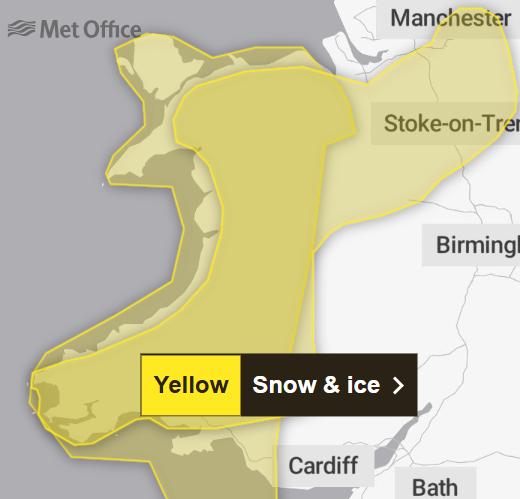


Yellow weather warnings for snow and ice have been issued for Wales.
A weather warning for ice is in place from 4.00pm today (Saturday, January 3) until midday tomorrow.
A yellow weather warning for snow is also in place from midday on Monday, January 5.
The Met Office has said to expect icy patches on some untreated roads, pavements and cycle paths which can lead to injuries from slips and falls on icy surfaces.

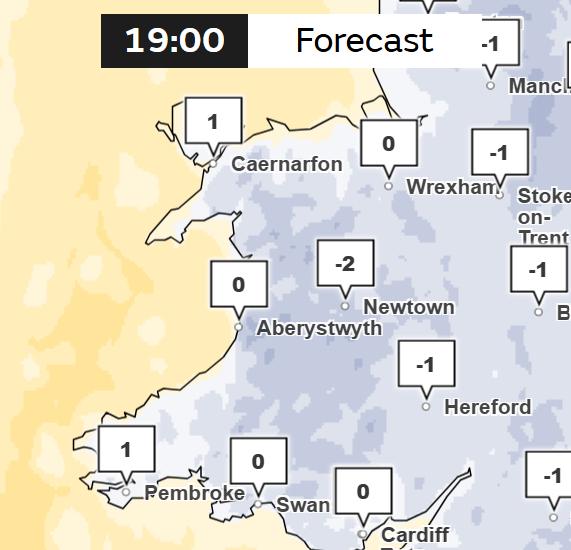
It has also said that: “Showers of sleet and snow (snow mainly over higher ground), will affect parts of Wales and southwest England during Saturday evening and overnight into Sunday morning. Where showers occur, icy stretches will develop on untreated surfaces.
“Whilst many areas will see little accumulating snow, there is potential for several cm over Eryri, higher ground of Pembrokeshire and Carmarthenshire, and perhaps parts of Bodmin Moor and Dartmoor.”
It has also said: “Snow showers are expected to push further inland across Wales, parts of northwest England, the West Midlands and southwest England during Sunday evening. Along windward coasts, rain and sleet is more likely, but inland showers will fall as snow.
“Whilst not all locations in the warning areas will see snow, around 1-3 cm is expected to fall in many places by Monday morning, with the potential for 5-8 cm to build up in a few locations, particularly across inland and higher parts of Wales. Icy patches are likely to form widely.”

So how should people stay safe?
The Met Office says to plan to leave the house at least five minutes earlier than normal to reduce needing to rush which will prevent risk of accidents, slips, and falls.
It also says if you need to make a journey on foot, try to use pavements along main roads which are likely to be less slippery.

Similarly, if cycling, try and stick to main roads which are more likely to have been treated.
You should also always check road conditions if driving, or bus and train timetables, amending your travel plans if necessary.


Share